
What if there was a specific pattern that separates $200 nights from $80 nights? Working with top earners in restaurants across the globe, one thing's for sure: they don't work harder. They work smarter. Increasing restaurant revenue doesn't always require more covers, higher menu prices, or expensive promotions. Sometimes, the biggest opportunity is already sitting at the table. Our latest solution CheckMax trains servers to think about the way they introduce drinks, recommend starters, check on a table, suggest dessert, and even say goodbye. These can all have a powerful impact on the guest experience and the final check. The best restaurant upselling techniques don't feel like selling at all. They feel like attentive, confident service. When servers understand how to guide rather than push, they can create a better dining experience while increasing beverage sales, appetizer orders, second rounds, desserts, repeat visits, and ultimately average check size.
Introducing The Server Six. Practical server sales techniques restaurant teams can start putting into practice today.
1. Make the First Contact Count
The sales opportunity starts before the food order is taken.
Mark Norfolk, VP, Talent Development at Frontline Performance Group, explains: "One of the simplest changes servers can make is becoming more intentional about how they introduce beverages. Rather than immediately asking, "What can I get you to drink?, start with the water decision," he explains.
"For water this evening, would you prefer tap, bottled, or sparkling?"
Give guests a moment to answer, then move naturally into beverage recommendations.
Instead of listing options randomly, lead with the beverages you most want guests to consider: signature mocktails, specialty cocktails, premium wines, or other featured drinks.
For example:
"For beverages, our signature cocktails are exceptional tonight. The [premium option] and [premium option]. We also have an excellent selection of wines by the glass, or perhaps a craft beer?"
Norfolk notes this is an important principle in restaurant sales training: recommendation order matters.
"Now here's the key: list your beverage options starting with the highest-margin items. Think mocktails, specialty cocktails, then work down. You're programming your guest's brain to think premium first." he says.
What restaurants can measure
• Track beverage upsells vs. standard orders
• Monitor average beverage spend per guest
• Note customer response and engagement levels
2. Stop Asking Yes-or-No Questions About Appetizers
Consider these two questions: "Would you like any starters?" and "What's catching your eye for the table to start?"
They seem similar, but they create very different conversations. The first invites a yes or no. The second assumes starters are worth considering and encourages guests to think about which one they might enjoy.
Servers can also make a specific recommendation: "For the table, I'd recommend starting with the [item]. It pairs beautifully with what you've chosen."
"You're not selling; you're assuming they're already buying,” Norfolk explains.
The recommendation becomes even stronger when the server understands the menu well enough to explain why a particular dish makes sense.
Timing Matters
• Deploy immediately after drink orders are taken
• Use the menu as a visual aid, pointing to recommended items
• Plant seeds for items not immediately considered: "The [dish] is also phenomenal if you're in the mood for something different."
The Impact
• Revenue Increase: 40-60% increase in starter orders
• Table Spend: $8-15 additional revenue per table on average
• Guest Experience: Creates a shared dining experience, extending table time

3. Proactive Replenishment Matters
The difference between good servers and great ones? They're drink detectives. Watch those glasses like a hawk.
Norfolk says: “When a drink reaches roughly one-quarter to one-third full, that's your signal.”
"Ready for round two now, or shall I bring it with your mains?" Notice what isn't happening here.
You're solving problems before they become problems. You're basically asking the guest if they want a drink, or want a drink.
"That improves service and creates another sales opportunity at the same time,” he says.
Servers can also use the moment to introduce something new: "Same again, or fancy trying something different?"
For groups, it may be as simple as: "Shall I bring another round for the table?"
Of course, good judgment is essential. Servers should recognize guests who are driving, drinking slowly, watching their budget, or simply don't want another alcoholic beverage. Non-alcoholic alternatives can be offered just as naturally.
Effective restaurant upselling should always respond to the guest rather than override them.
Visual Cues: Glass at 1/4 full = action trigger
Timing Window: Aim for second-round delivery 5-7 minutes before mains.
Approach: "Ready for round two now, or shall I bring it with your mains?"
Advanced Techniques
The pre-bus: Clear glasses discreetly while offering a replacement Offer upgrade opportunities: "Same again, or fancy trying something different?"
Coordinate the group: "Shall I bring another round for the table?"
Proactive replenishment is a good example of why sales and service don't have to compete. Done correctly, the same behavior can improve both.
4. Master the Two-Minute Check-In
The classic table check-in can either feel attentive or intrusive. Timing makes the difference. Checking the instant food reaches the table doesn't give guests enough time to evaluate it. Waiting too long means a problem may already have affected their experience.
“A useful rule is to give guests roughly two minutes to settle into the meal before returning,” Norfolk explains.
Then try asking: "Everything meeting expectations?" Or perhaps, "What else can I bring you?"
The second question is particularly powerful because it creates an opportunity to uncover something the table needs: another beverage, a side, sauce, condiment, or additional dish.
But the primary purpose of the check-in should remain service. Make eye contact. Listen to the answer. If there's a problem, address it quickly.
The Impact
Problem Resolution: 90% of issues caught and resolved before escalation
Additional Sales: 20-30% of check-ins result in extra orders
Guest Satisfaction: Demonstrates attentiveness without intrusion
Implement with the Two-Minute Rule
• Set an internal timer after food delivery
• Approach at exactly two minutes, guests have settled but haven't finished much
• Make direct eye contact: "Everything meeting expectations?"
• Listen actively and maintain eye contact throughout the response
• Address any concerns immediately
Follow-Up Opportunities
•"What else can I bring you?" (open-ended, assumes additional needs)
• Suggest complementary items: sauces, sides, additional beverages
• Note preferences for future visits
The strongest restaurant sales training teaches employees that fixing a problem quickly can be every bit as valuable as generating another sale.
5. Plant the Dessert Seed Before the Meal Is Over
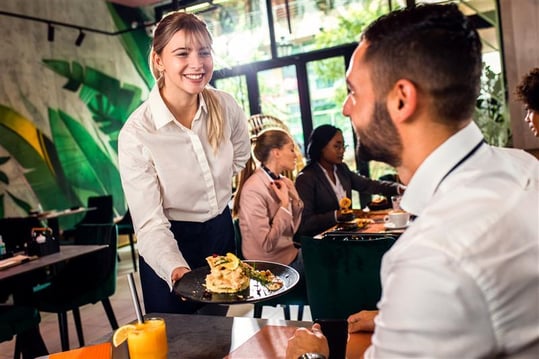
Dessert is often lost before anyone asks about it. Why? Because the typical approach is:
"Would anyone like to see the dessert menu?"
Once again, the guest is being given an easy yes-or-no decision. A better approach starts earlier.
As plates are being cleared, introduce dessert naturally: "What are we thinking for dessert?"
Then bring the dessert menu rather than asking whether guests want to see it.
"You can build curiosity with this advanced move: "For dessert, our pastry chef just finished something incredible." Then walk away. Let curiosity do the work. When you return, they're already mentally committed," Norfolk explains.
The Challenges
Full Guests: Offer to-go options or suggest sharing smaller portions.
Time Constraints: Suggest quicker options or offer to-go service.
Dietary Requirements: Know all ingredients and offer alternatives immediately.
The Metrics
- Dessert attachment rate
- Average dessert spend per table
- Guest feedback on dining experience completion
6. Turn the Goodbye Into a Reason to Return
The final interaction is one of the most overlooked moments in restaurant service. A server drops the check, processes payment, says "Have a nice evening," and moves on.
But the guest's final impression is an opportunity to create the next visit. “Instead of a generic goodbye, make the farewell personal,” says Norfolk.
For example: "If you're back soon, try the braised lamb. It's my personal favorite." Or perhaps, "We do wine tastings on Thursday nights. We'd love to have you back for one."
"You're not ending the experience. You're starting the next one," says Norfolk.
The Impact
Return Rate: 40-60% increase in repeat customers
Word-of-Mouth: Personal recommendations generate 3x more referrals
Long-Term Revenue: Returning customers spend 67% more than first-time visitors
Closing Challenge
Ultimately, putting these restaurant upselling techniques into practice isn’t about memorizing a script; it’s about building them naturally into the flow of service. Encourage servers to find their own voice, understand when to make recommendations, and recognize that timing can be just as important as what they say. And don’t overlook the final interaction: every goodbye is an opportunity to give guests a memorable reason to return. When these small behaviors become consistent habits, better service and stronger sales can follow naturally. This system works because it's built on human psychology, not pushy sales tactics. Guests feel taken care of, not sold to.
Great service creates memorable guest experiences and drives profitability. The challenge is delivering it consistently, across every shift, every server, and every table. That’s where CheckMax comes in.
Put The Server Six into practice, track the results, and see what happens when great service becomes a repeatable strategy. Because when your team starts thinking like revenue strategists, not simply order-takers, every guest interaction becomes an opportunity.
Ready to take it further? Discover CheckMax, FPG’s AI-powered performance enhancement platform designed to help restaurant teams turn better service behaviors into higher check averages, stronger performance, and greater profitability.