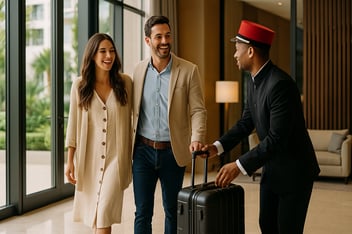

Greeting a guest is one of the most important moments in hospitality. It is the first opportunity to create trust, build an emotional connection and understand the purpose of a guest’s stay. Whether guests are arriving after a long flight, traveling for business or celebrating a special occasion, the welcome they receive helps shape their perception of the hotel experience.
A professional and genuine greeting makes guests feel valued from the moment they walk through the doors while setting the tone for the level of service they can expect throughout their stay. First impressions matter, and simple gestures such as a warm introduction, genuine eye contact and using a guest’s name can transform a routine interaction into a memorable brand experience. For hotels looking to improve guest satisfaction, strengthen loyalty and encourage positive reviews, training staff on the importance of greeting a guest properly should be a top priority.
Why Greeting a Guest Matters in Hospitality
Greeting a guest properly is one of the most important parts of creating a memorable hospitality experience. A friendly, personalized welcome helps guests feel valued, builds trust, and creates opportunities for meaningful guest engagement from the very beginning.
This is where Frontline Performance Group’s (FPG) training helps hospitality businesses elevate both guest experience and revenue performance. FPG empowers staff to confidently greet guests, build rapport, and make relevant, personalized recommendations during check-in that not only enhance the stay, but also drive incremental revenue.
Additionally, as a centralized platform, FPG improves staff performance, increases incremental revenue, and elevates the customer experience through consistent training, clear reporting, and actionable tools — all seamlessly integrated into one solution. Ultimately, happy guests are those who experience the very best a hotel has to offer, and FPG helps teams deliver exactly that.
A positive greeting can:
- Create an immediate sense of comfort and trust
- Reduce stress for tired or frustrated travelers
- Build stronger guest relationships
- Increase the likelihood of positive reviews and repeat bookings
- Encourage guests to engage with hotel amenities and upgrades
On the other hand, poor greetings can leave guests feeling ignored, rushed, or unimportant. In a competitive hospitality industry, exceptional guest service starts at check-in.
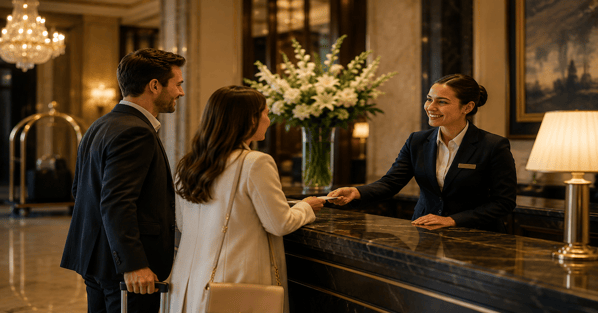
The Key Elements of Greeting a Guest Professionally
Greeting hotel guests consistently and professionally requires far more than simply following memorized scripts. Instead, front desk staff should combine strong communication skills, positive body language, and in-depth product knowledge to create a welcoming and personalized experience for every guest.
The Importance of Using a Guest’s Name
Additionally, personalization plays a major role in delivering exceptional hospitality experiences. By addressing guests by name, hotel staff can create a stronger emotional connection while also helping guests feel genuinely recognized rather than simply processed through check-in. Even small gestures, such as saying, “Welcome back, Mr. Smith,” can instantly enhance the guest experience and, in turn, leave a more lasting and positive impression.
Ask Better Questions, Create Better Experiences
Open-ended questions such as, “What brings you to the area?” can help uncover the guest’s intent and serve as the beginning of a meaningful connection. According to Paul McLoughlin, President – International at Frontline Performance Group, when hotel teams learn how to build genuine rapport, use confident assumptive language, and ask thoughtful questions, they not only enhance guest satisfaction, but also create valuable opportunities to increase revenue. As a result, these conversations become more than just part of the check-in process — they become an essential part of delivering exceptional hospitality while driving business performance.
Hotels that successfully implement these strategies are often able to command rates 15–20% higher, while those that don’t may be leaving valuable revenue untapped. Guests are naturally more inclined to spend during their stay when they feel welcomed and understood. By creating an environment where staff feel confident asking the right questions, hotels can deliver more personalized experiences and FPG’s expert training is designed to help teams do exactly that.
Smile and Make Eye Contact
A genuine smile immediately helps staff appear more approachable, welcoming, and friendly, while steady eye contact further ensures guests feel acknowledged, valued, and respected throughout the interaction. Even during particularly busy periods, however, staff should remain calm and attentive, avoiding any appearance of distraction or overwhelm, as guests quickly notice these nonverbal cues during first impressions.
Maintain Positive Body Language
Guests notice body language just as much as spoken words. Staff should:
- Stand upright and be attentive
- Avoid crossing arms
- Face the guest directly
- Maintain an open and welcoming posture
Positive body language communicates professionalism and confidence.
Related reading: Hotel Front Desk Training: How Role Play Boosts Confidence and Sales
Listen Carefully to Guest Needs
Greeting a guest is also an opportunity to understand their expectations. Staff should actively listen for important details and buying signals such as:
- The purpose of the trip
- Special occasions
- Room preferences
- Accessibility needs
Listen out for questions such as: Does our room have a nice view? What time is check-out? Are there any upgrades available? Do you have a spa?
These details help front desk employees make tailored recommendations, personalize stays and improve service quality.
Common Mistakes When Greeting a Guest
Even experienced hotel employees can unintentionally create negative first impressions. Proper training helps staff avoid these common mistakes.
Multitasking During Check-In
Answering phones, speaking to coworkers, or looking away from the guest during check-in can make guests feel ignored. Guests should always feel like they have the staff member’s full attention.
Rushing the Interaction
Efficiency matters, but rushing guests through check-in can feel impersonal. Staff should balance speed with genuine hospitality. A calm and attentive greeting creates a much better experience.
Making Assumptions About Guests
Staff should never assume guest preferences, travel reasons, or service expectations. Asking thoughtful questions helps provide more personalized service.
Sharing Room Numbers Out Loud
For privacy and security reasons, staff should avoid announcing room numbers publicly. Writing the room number discreetly is considered best practice in hospitality.
How Technology Impacts Greeting a Guest
Modern hotel technology can help staff create smoother and more personalized arrival experiences.
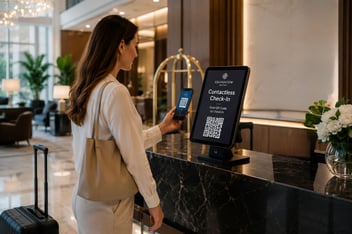
Mobile and Contactless Check-In
Contactless check-in solutions allow guests to complete parts of the arrival process before reaching the hotel. This reduces wait times can be a more convenient experience. While contactless check-in offers greater convenience and efficiency, it can also create challenges for hotels trying to maintain personalized guest experiences. By reducing face-to-face interactions, hotels may miss valuable opportunities to build rapport, recognize guest preferences, and recommend upgrades or additional services. Additionally, not all travelers prefer a fully digital experience, particularly when dealing with special requests or issues during their stay. As a result, many hotels must balance technology with human connection to ensure guests still feel welcomed and valued.
Guest Profiles and Personalization
Hotel management systems can store guest preferences, stay history, and special occasions. This information allows staff to personalize greetings and anticipate guest needs. For example, staff can recognize returning guests, acknowledge birthdays, or offer recommendations based on previous stays.
Training Staff on Greeting a Guest
Consistency is one of the most important parts of delivering excellent hospitality. Every guest should receive the same warm welcome regardless of how busy the hotel may be.
Use Role Play for Training
Role play builds two essential strengths in front desk agents:
- Confidence with dialogue
- Comfort with procedures and making recommendations
This helps employees feel confident and prepared for different situations. They also ensure consistency across teams and shifts.
Role play can be especially helpful for practicing many kinds of situations:
- Early arrivals
- Late check outs
- Upsell offers
- Top-down selling
- Overcoming objections
- Guests with special requests
Role play Real Guest Scenarios
Roleplaying allows staff to practice handling different guest interactions in a low-pressure environment. Managers can provide feedback on tone of voice, body language, and communication style to improve performance.
Encourage Authentic Hospitality
While scripts are useful, greetings should never sound robotic. Staff should adapt conversations naturally while maintaining professionalism and warmth. Guests appreciate authentic human interaction.
Creating Lasting First Impressions
Greeting a guest properly is one of the simplest yet most powerful ways hotels can improve the guest experience.
From a friendly smile to personalized communication, every interaction at the front desk contributes to how guests remember their stay. Hotels that invest in hospitality training, guest service standards, and modern technology are better positioned to create memorable first impressions that drive loyalty and revenue. In hospitality, exceptional service begins the moment a guest walks through the door.
Ready to elevate your guest experience while unlocking new revenue opportunities? Discover how Frontline Performance Group empowers frontline teams across 2,500+ hotels in more than 120 countries through expert training and proven upselling strategies.
Request your free demo today and see how FPG can help your hotel drive guest satisfaction, team performance, and incremental revenue.